Building and maintaining a healthy Marriage

How we treat our marriages depends on our perceptions. What does marriage mean to you? Why do you want to marry and have a family?
Marriage between a man and a woman is ordianed of God and that the family is central to the Creator's plan for the eternal destiny of His children.
-The Family Proclamation-
I believe very few of us would walk into a marriage with a destination of divorce or failure of the marriage in mind. We marry the person to whom we feel deeply connected and committed with a desire of maintaining and sharing a state of joy and happiness in this life together.
At the same time, many of us may not be equipped with the knowledge and skills required to succeed a HAPPY and FULFILLING marriage after our well-designed perfect wedding ceremony. We naively believe and hope that love alone will sustain and succeed our marriages. But a healthy marriage requires more than that.
In order to maximum our chances to succeed, we should build the relationships upon a "stable" foundation, in other words, we should do our best to "fall in love and build a romantic relationship that lays a good foundation upon which we build our marriages.
Equal Partnership
Love is the Greatest Power
What does power mean to you? Do you crave for power? How do you use or exert your power in your relationships? What does equal partnership in a marriage mean to you?
Having power over our own lives gives us a sense of being in control. It is essential to our own well-being. Social psychologists define power as the capacity to influence others and to resist being influenced by other.
In stressful situations or circumstances, we could avoid feeling depressed or powerless as long as we feel there is still something we could do which implies we still have power to control the situation. The most stressful situation is that there is nothing we can do about it and that's where we might meet the "monster depression".
Physically and psychologically, men and women are very different. Neuroscientists have proven the brain has its sex. They could identify if a brain belongs to a female or a male with 100% accuracy.
Equal partners in a marriage doesn't mean we have to be good at doing the same things. It simply means sharing the power in marriage, having mutual influences on each other and the marriage/relationship, making decisions together, so that both parties in the marriage feel a sense of being in control and being respected and loved.
For individual wellbeing and health of a marriage, equal partnership in a marriage is an absolute necessity and first principle.
Now the question is: how do we share or have equal power in relationships?
To assess the balance of power in a relationship, scholars differentiated the scale of power processes and the scale of power outcomes. The scale is to assess behaviour. Not to judge the person. It's important to keep this in mind as we will be discussing how to deal with power struggle and conflicts later on in this post.
Assessing Power in Relationships
Power Processes Scale
Power Outcomes Scale
My partner tends to discount my opinion
When it comes to money, my partner's opinion usually wins out
My partner does not listen to me
When it comes to children, my partner's opinion usually wins out
When I want to talk about a problem in our relationship, my partner often refuse to talk with me about it
It often seems my partner can get alway with things in our relationship that I can never get away with
My partner tends to dominate our conversations
I have no choice but to do what my partner wants
When we do not agree on an issue, my partner gives me that cold shoulder
My partner has more influence in our relationship than I do
I do not feel free to express my opinion about issues in our relationship
When disagreements arise in our relationship, my partner's opinion usually wins out
My partner makes decisions that affect our family without talking to me first
My partner and I do not talk about problems until we both agree on a solution
I feel like my partner tries to control me
Power Processes and Power outcomes (Cromwell & Olson)
The power struggle
Power struggle is not uncommon in relationships. It plays its role in almost all kinds of relationships, between co-workers, between parents and children, between employers and employees, etc.
In marriages, even those who are very committed for equal partnership, may still find themselves in power struggles from time to time. So it would benefit us if we take a look at it and be aware of it.
Raven, Centers, and Rodrigues identified 6 different kinds of power that people exert in a marriage.
Type
Reason for Compliance
Coercive
To avoid punishment by spouse
Reward
To obtain rewards from spouse
Legitimate
Spouse has the right to ask and you have the duty to comply
Expert
Spouse has special knowledge or expertise
Referent
Identification with and admiration of spouse and desire to please him or her
Informational
Persuasion by spouse that what spouse wants is in your own best interests
I think we may relate them well in daily lives.When a husband or wife withdraw to avoid an argument and all the complaints and accusations from the partner, that's the "coercive power"; when a husband did something that pleases his wife and gets something he wants in return, that's "reward power"; when a husband strongly believes that he has the responsibility to share the burden of housework with his wife, he may wash the dishes when his wife asks him even if he feels tired, that's "legitimate power"; when a wife trust her husband's expertise in deciding which car they should buy, that's "expert power"; when a wife watches football game with her husband (assume she's not a fan of football), and try to understand the rules, it's "referent power"; when a husband accept the advice of eating healthy food because his wife convinced him how healthy eating could benefit to his energy and mood, that's "informational power".
When we interact with our partners, how we communicate reveals or implies whether we are exerting power or avoiding power. It can be symmetrical or complementary.
There are three types of symmetrical discussion: competitive, neutralised or submissive.
In neutralised symmetrical interaction, the partners respect each other and try to avoid exercising power and control. In submissive symmetrical interaction, bother parties try to let the other have control over the situation. In complementary interaction, one partner may be dominant and the other submissive based upon the given situation, such as in the scenarios of expert, informational or reference power.
It is the competitive symmetrical discussion or interaction that engages people in power struggle. Both parties want to take control of the situation.
When we engage ourselves in a power struggle with our partners, we inevitably invite conflicts into our marriages.
How we deal with the conflicts becomes crucial to the health of our marriages. If we could fight with a good and constructive style, we may even enhance intimacy in our marriages. But if we let the conflicts get out of control and become so severe that a divorce may be just around the corner, we ourselves, our partners and our children will all suffer from the consequences of those severe conflicts that might have been under control with some awareness and good fighting styles.
Conflict Resolution
Researches show that the problems couples bring to therapy including:
Communication
Fiances
Intimacy
Decision Making
Sex
Leisure Activities
Children
Housecleaning
Among everything, communication is the top one problem. The researches on marital disruption and understanding the process that lead to marital breakdown emphasis on communication process and conflict management.
Fighting Styles in Resolving Conflicts
There are 5 different styles in how we handle conflicts identified by social scientists who specialise in interpersonal conflict :
competition: high concern for oneself and a low concern for the other
avoidant: have little concern for oneself and the other
accommodation: low concern for oneself and high concern for the other
compromise: a moderate amount of concern for oneself and for the other
collaboration: hight degree of concern for both oneself and the other
I think it's obvious to everyone that collaboration would get the best outcome for resolving conflicts in a marriage, or in any relationships and demonstrate love, concern and equality. But it's not always possible to find a solution that would meet and satisfy the need of both parties, compromise would be the reasonable and healthy choice in that case.
While "fighting" our way towards a solution, keep in mind the following:
Maintain perspective
Develop tension outlets
Avoid festering resentment
Be sensitive to Timing
Communicate without ceasing
Be flexible, wiling to compromise
Attack problems, not partner
Keep loving while fighting
The Conflict Resolution Process:
1.Identify/define the issue
2.Contract-when it will be addressed, etc
3.Clarifying the issue completely
4.Identify needs and wants (for both)
5.Identify alternatives (brain storming)
6.Solidify agreements (choose one of the plans from the alternatives to act)
7.Review or renegotiation after trying out the plan
Those steps have been proven to be very effective and really works in solving conflicts between couples. Marriage consolers help their clients by walking through those steps to solve their "unresolvable" problems. Those steps are actually developed from a couple communication program at the University of Minnesota. It's well researched.
While going through those steps, don't forget to apply effective communication.
The Marital process researches also emphasis on characteristics of individual spouses and transformative process in relation to establishing and maintaining a strong and healthy marriage.
Actually, every relationship we have with others depends on our own way of being, in other words, who we actually are.
It is in relationships, especially in intimate relationships, our characters and personalities are refined, and we have chances to make personal progress.
By recognising the power struggle and resolving conflicts in constructive ways, we can be a better person. By being a better person each day, our relationships and marriages will also grow and develop towards what we hope it would be.
Foundational Marriage Process
Equipped with the awareness of power struggle, practice of effective communication and conflict resolution, let's put our effort in maintaining the health of our marriages.
1.Personal Commitment to the marriage
According to the exchange theory, marriage is nothing more than a contract. If we agree and adapt this theory on marriage, there's a big chance that we would walk away from a marriage when it impairs our happiness. People marry with a contractual view of marriage as seek balance between cost and benefit. When cost is greater than benefit, what's the best choice? End contract and walk away... Or keep the unhappy marriage but look for happiness elsewhere when the cost of divorce or separation is greater than staying in the unhappy marriage...
There is another perspective called "covenant marriage". In this kind of marriage, people believe the sacredness of a marriage and the covenant they make with their spouses. Their focus is not on their own cost and benefit, but on the growth and progress they make together with their spouses within the marriage. In troubled times, they will most likely choose to standby their spouses and support each other towards their shared goals.
The difference between those two perspectives of marriage lies in the level of commitment.
There are 2 kinds of covenant commitment from social science perspective: constraint commitment and personal dedication(inward/internal decision and desire; sustains fulfilment in a marriage)
In "contractual marriage", we may find "constraint commitment" which involves a sense of outward obligations that keep a couple together when they otherwise might have parted their ways. In example, social pressure or the well-being of the children, or as mentioned above-high expense of the divorce. Social scientists suggest that this kind of commitment may establish stability of a marriage. Some researches show the the most stable marriages are find among the "middle class" as the couples are bond to pay mortgage together.
In "covenant marriage", a deeper commitment is involved in addition to the "constraint commitment" which is "personal dedication". It is an inward drive and desire to love and to find mutual benefits in the marriage. It is an intentional decision and dedication.
We may all have had the experience at some point in our lives that the moment we make up our mind and finally make a decision, all our thoughts, energy and strength would flow towards the same direction and destination that we desire.
That's the power of personal dedication. It upholds a HAPPY and FULFILLING marriage. When we are dedicated to something, we find joy and satisfaction simple through putting our effort in it. If we are dedicated to a marriage, we will find joy in our effort towards building and maintaining a healthy and happy marriage.
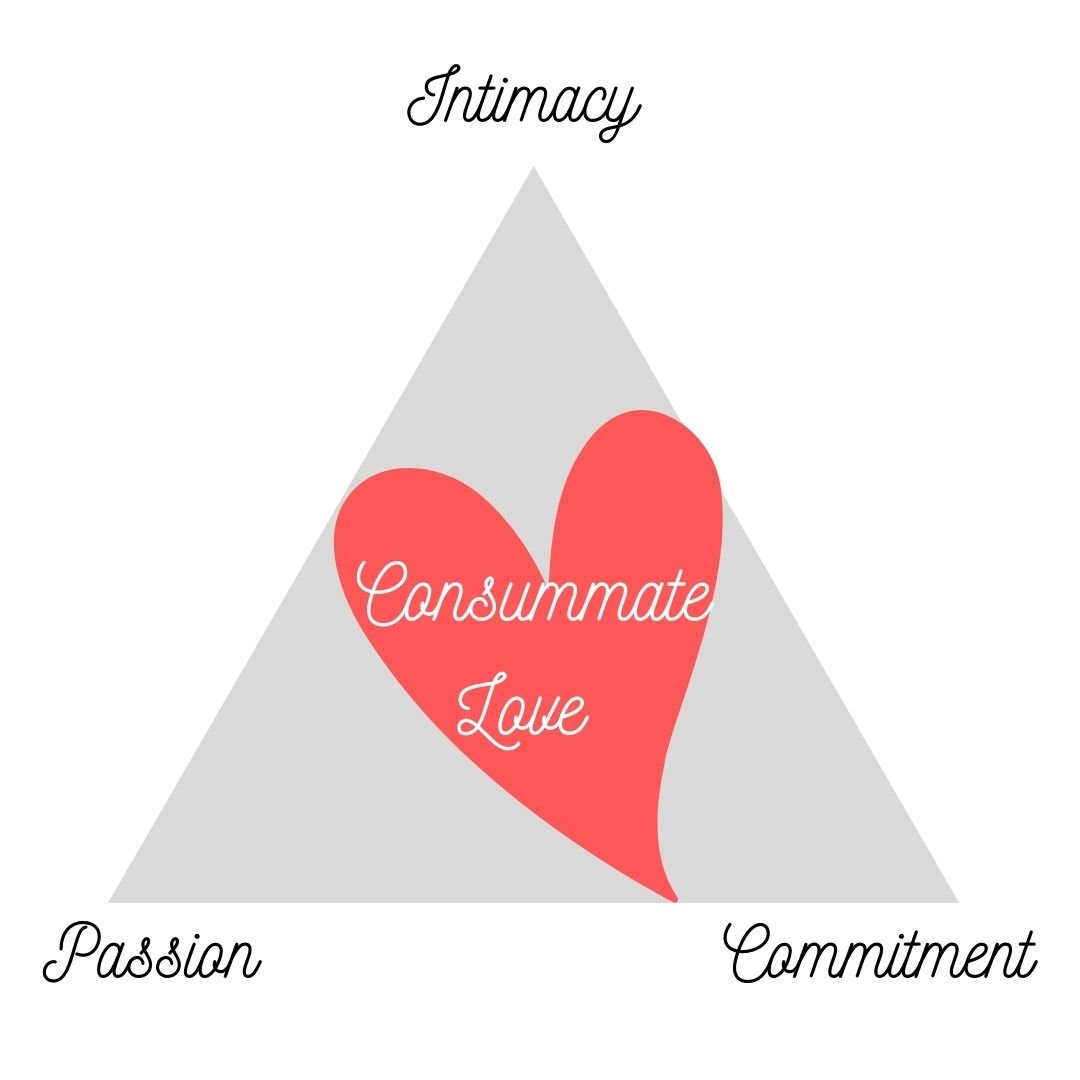
In another post "falling in love", we discussed elements of love (triangular theory of love). When all three elements (passion, commitment and intimacy) exist at the same time in a relationship, consummate love is achieved. Here, I would like to add a Triangular Theory of covenant marriage by David A.Bednar. The theory is easy to understand. When both the husband and wife are dedicated to the Lord Jesus Christ, they will grow closer to each other as they both walking closer to the Savior. (This is my personal belief.)
Successful marriages and families are established and maintained on principles of faith, prayer. repentance, forgiveness, respect, love, compassion, work and wholesome recreational activities.
-The Family Proclamation-
Personal commitment is key element to love. Personal commitment is a key to healthy and happy marriage.
2.Love and Friendship
Yes, I believe that attraction and love has to be present in any healthy and happy marriage. The romantic love needs its nurturing soil on the solid ground to truly blossom and lastsfor a life time. We find that nurturing soil and solid ground for romantic love in being each other's best friend.
Talk to each other as friends, support each other as friends, connect to each other like friends.
I interviewed a couple who were happily married for 40 years and asked them what single ONE advice that they would give to newly married couple. They both confidently and firmly stated: be each other's best friend.
Researches also suggest that couples who build their relationships upon friendships feel a higher level of happiness and satisfaction in their marriage.
3.Positive Interaction
Communicate and understand each other's love language, practice effective communication and apply conflict resolution process. A "soft start-up" may contribute a lot to positive interaction in some negative situations.
4.Accepting Influence from One's Spouse
As we have discussed above, it's important to share power in a marriage. It's not only a manifestation of equal partnership, but more importantly, it is a foundation for the well-being of both individuals and their marriage. To be able to accept influence and to influence are both essential to a healthy relationship.
To be able to accept influence from our spouses helps us remain or improve a sense of humility.
To be able to influence our spouses enhances our confidence and intimacy with our spouses.
5.Respectfully Handle Differences and Solve Problems
Even though with all the skills of effective communication and conflict resolution, if we do not know how to respect our partners or others, those skills profit us nothing.
How do we truly respect other people? How do we accept others as who they are without judging? I think the topic worth being addressed in another post.
6. Continuing Courtship Throughout the Years
As we honour our own commitment, we make efforts to continue courtship after the wedding ceremony. The wedding is not the destination, but a start point towards eternal progress and joy.
Marital Fidelity
Determine that there will never be anything that will come between you that will disrupt your marriage...Be fiercely loyal one to another.
Gorden B.Hinkley
I believe I don't need to explain why this is so important for maintaining a healthy marriage... :P
Wise Walls for preventing Infidelity
Resist the desire to rescue an unhappy soul who pours his or her heart out to you
Don't share the most painful things of your soul with an attractive alternative. This develops deep levels of intimacy
If a conversation makes light of marriage, respond with something positive about your own marriage
Discuss marital issues wit your spouse. Work on the problems at home. If you need to talk to someone else about your marriage, be sure he or she is a friend of the marriage
Don't have lunch or take work breaks with the same person all the time
Don't have lunch alone with an old flame
If an old boyfriend or girlfriend is going to be at a class reunion, make sure you bring your spouse along
When you travel with a coworker, meet only in public places
Don't flirt with anyone other than your spouse
Don't travel together with someone of the opposite sex when going to meetings for work, church, or in other circumstances
Broderick, 1991; Glass, 1999; Godard, 2007
Repentance/Apology/Regret and Forgiveness in Marriage
I'm using three words to express the same concept. If you are religious, you might be familiar and used to the word "repentance". If you are not religious, the substitute is simply that you regret doing something and feel sorry about it. As I am quite familiar and comfortable with the word "repentance", I will simply use this one word in the following.
In our lives, in our relationships, there are deeds we wish were never done, words we wish were never said. Mistakes and wrongs, do they define us and others, or do they help us learn and grow? Are we willing to give other people including our partners chances to learn from their mistakes and make personal progress when they mess up?
It depends on our mindset. If we have a "fixed mindset", then yes, we would let those mistakes define us and we will judge others by their mistakes. If we have a "growth mindset", then we will simply learn from our mistakes and do better as well as be better in the future. I would like to write about this topic together with the topic of how to respect others in another post.
Here I simply want to stress the point that forgiveness is an ability we may want to develop in order to bring peace to our hearts and lives, and harmony in our marriages and relationships.
Repentance and forgiveness are interactive. Mental health experts acknowledge that it is impossible to address emotional and physical well-being without considering the relevance of repentance and forgiveness.
What does forgiveness mean to you? Rye and Pargament summarised the wok of several authors and noted that forgiveness should not be confused with legal pardon, condoning, or forgetting. It is also distinct from reconciliation. They believe that "conceptualising forgiveness using their distinctions allows people to forgive without compromising their safety or their right to pursue social justice."
Although forgiveness can be a conceptualised, it takes actions to actually forgive. There are also steps we need to take from feeling angry or hurt towards forgiveness and healing. We can't simply jump from anger and hurt directly to complete forgiveness, because suppressing an emotion would only intensify it. Having resentment or feeling angry is never the problem but reacting to those emotions and being dominated by them.
Steps Towards Forgiveness and Healing
Although there are different models of forgiveness, cognitive-behavioural approach fits best to my philosophy and belief.
Recall the hurt: Yes, it hurts. It takes courage to face our mistakes, but facing our wounds might require even more courage. In order for the wounds to be healed, to come to a closure, it has to been seen and dealt with. I know it's hard. Be brave and make this first step towards healing and freedom.
Empathise: Understanding leads to mercy and forgiveness...I've experienced this many times in my own life. When I understand, I could not be unforgiving. It may even direct us to see our own wrong-doings in it, thus bring us to our own repentance.
Offer the altruistic gift of forgiveness: If empathy may lead us to some awareness of our own contribution that drive us to a place where forgiving others is necessary, then offering that forgiveness might be a great gift not only for those who offended us, but also for ourselves .
Commit publicly to forgive: This is helpful because once you forgive, you don't want those negative feelings back. You want to let go and be free from holding resentment. So...make it official. You can be creative on that. ;)
Hold on to forgiveness: If it ever comes back, remember to let it go. Some feelings might not be resolved once for all. But as long as we are aware of them, not reacting to them, keep letting go of them. The healing power of forgiveness will bring peace and joy to our hearts.
Apology and Repentance
Guilt and regrets may just hurt our hearts as much as resentment and grudge, if not more. When forgiveness is required for healing our wounded hearts, then sincere apologies or repentance would be the medicine to lighten the burdens and heaviness of our hearts.
You might want to know what are the steps of repentance. Well, I'm not going to list them. I would only write one sentence about it: when your heart wants to correct the wrongs and makes a difference, it will direct you to do the right things. Our consciousness will lead us to the change of heart which fills our hearts with peace and joy.
https://www.youtube.com/watch?v=-9740EAOv90
Up to this point, I guess I have to mention that there are research-based connection between faith and family, employing a three-dimensional framework: religious community, religious practices and religious beliefs. Generally speaking, couples who share the same faith tend to do well even during troubled times.
The focus or purpose of this post is to discuss how we can build and maintain a healthy marriage. A healthy marriage is not a perfect marriage without struggles, conflicts or disappointments.
A healthy marriage is a good enough marriage with a good enough partner of our own choices, in which we could learn and grow together.
Have I mentioned that I believe in eternal marriage and family? Yes, that's what I believe.
But it doesn't mean that I believe anyone, be it man or woman, should ever stay in an abusive marriage or relationship. If you find yourself in an abusive relationship (emotionally, mentally or physically), get out of it.
There are marriages that worth to be saved. There are stages or process for deciding on a divorce. Those are the thing I will write in the future.
I, with all my heart, wish this is the post you read, apply some of its principles, and find yourself in a Happy and Fulfilling marriage. I, with all my heart, wish no one would need to to read my post about divorce.
Reference: Successful Marriages and Families
Thank you for reading. Hope you find joy and make personal progress in your marriages and relationships.